

PERCUSSION
Wide, natural and in the room
Dan Slater records percussion with one Stereo Ribbon, lightly processed in Logic Pro.
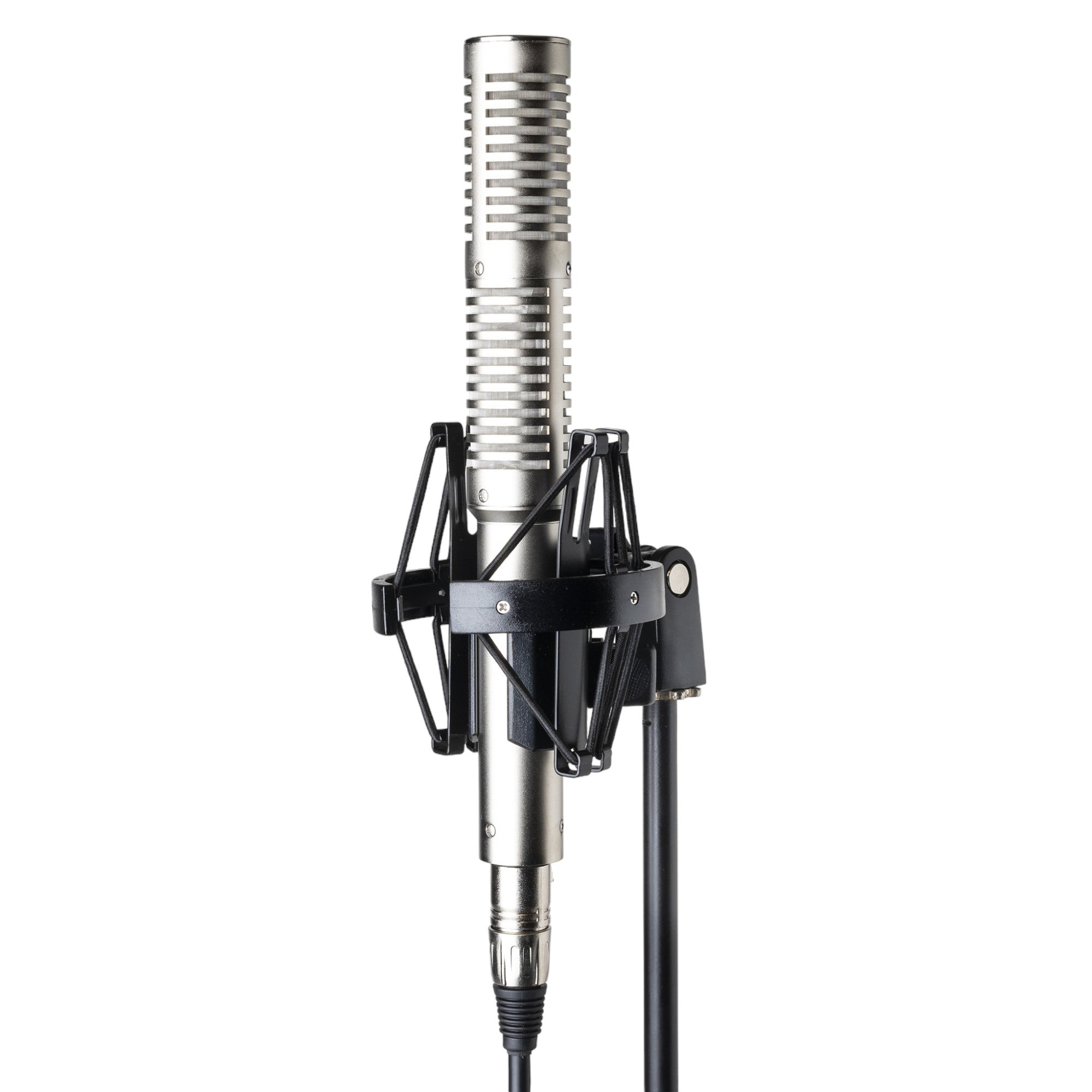
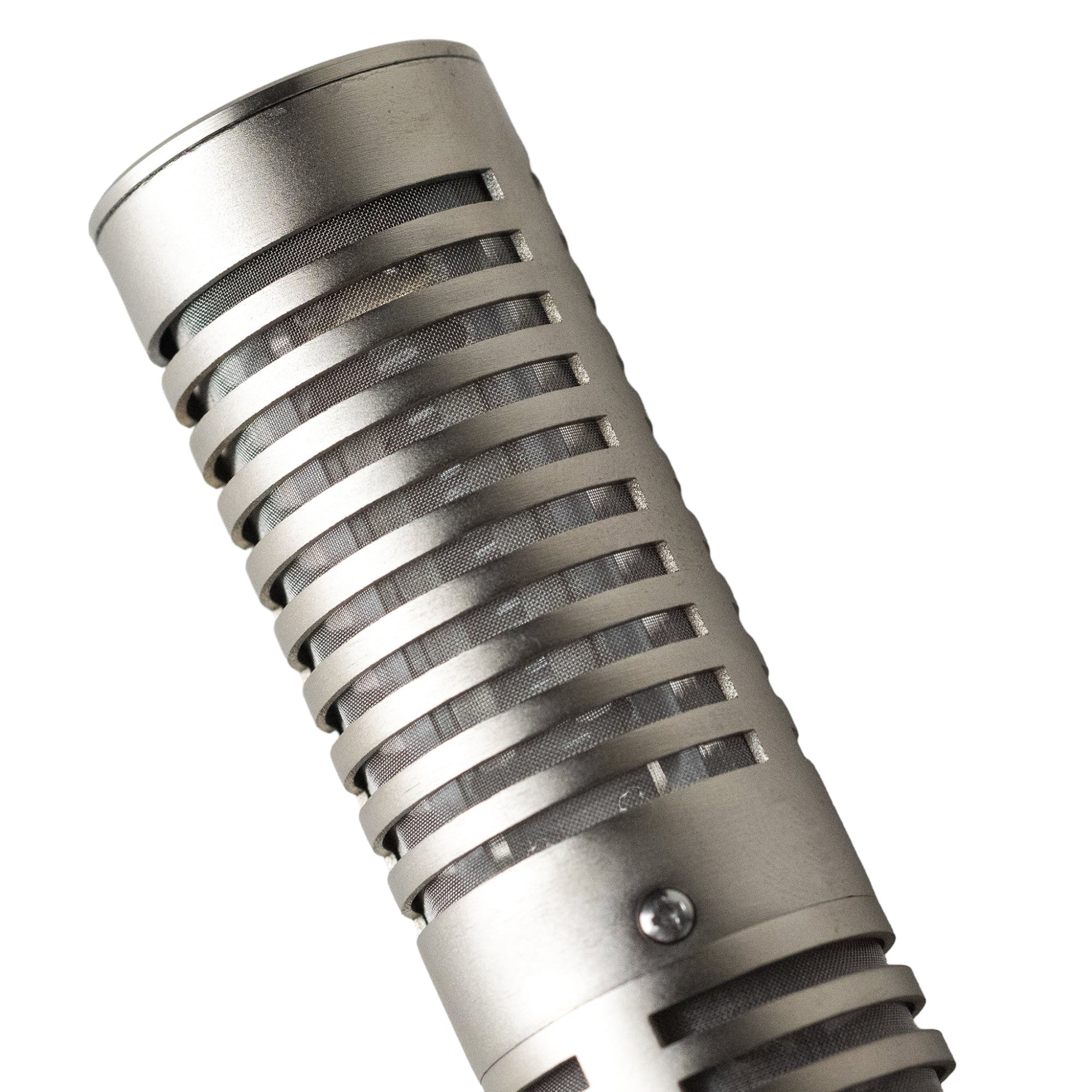
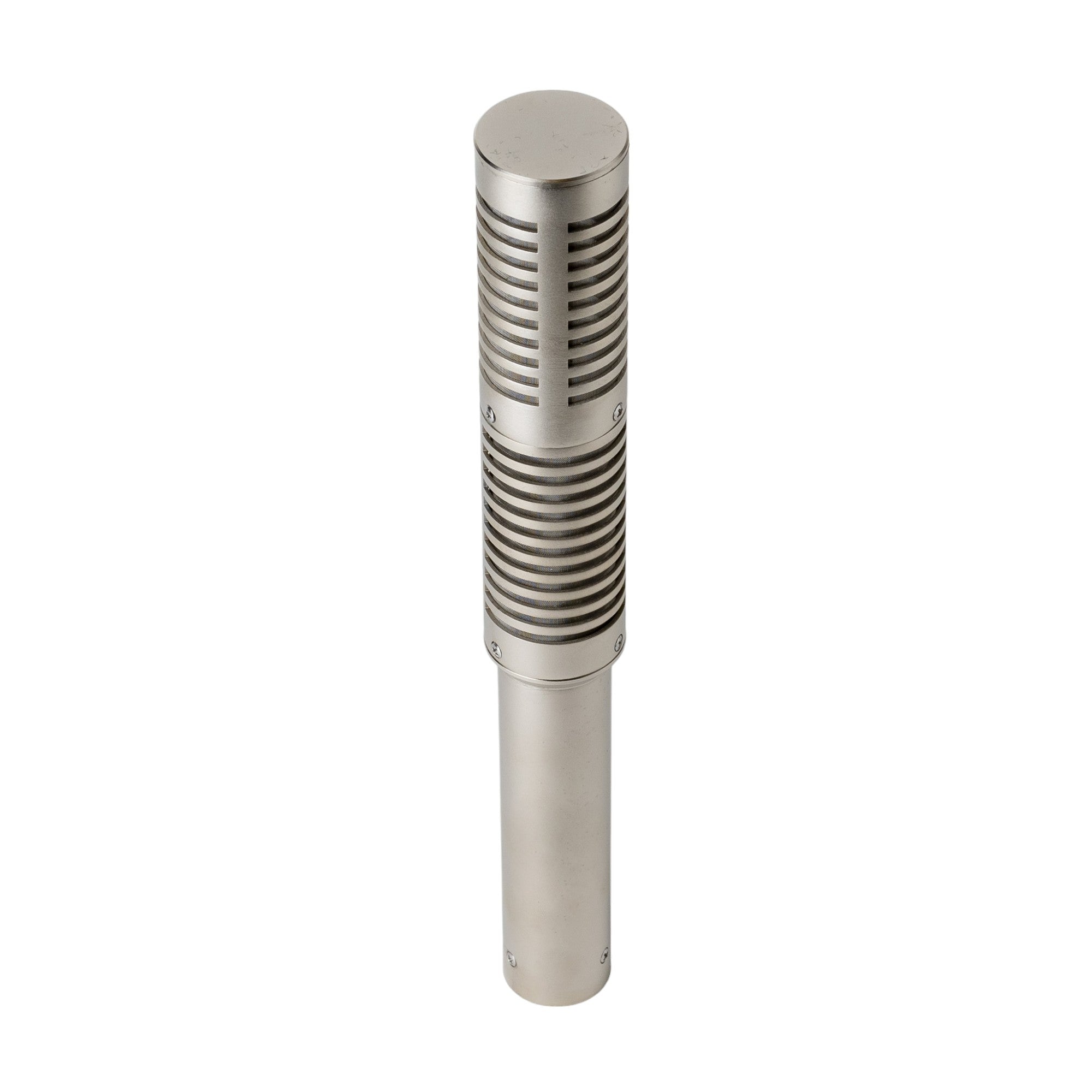
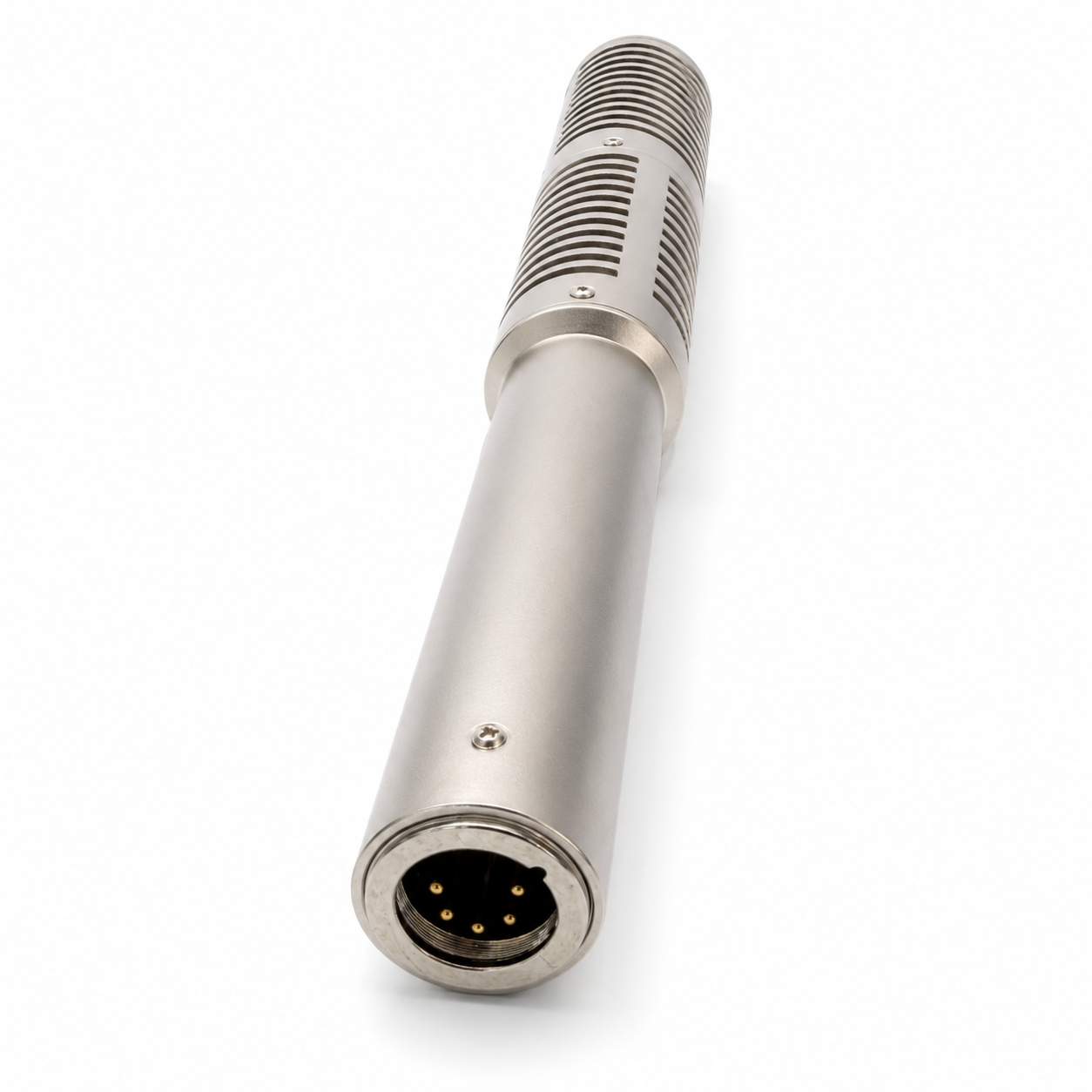
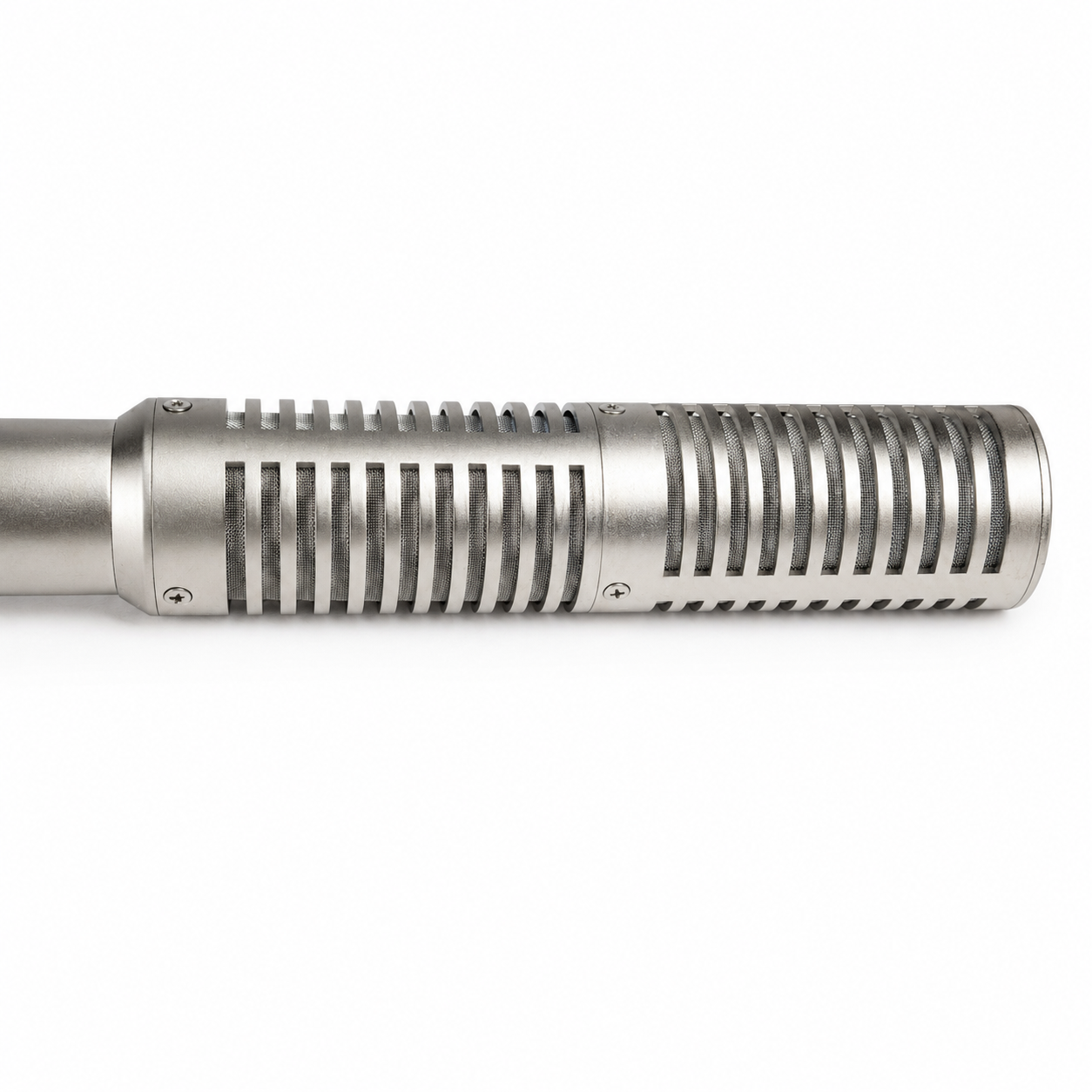
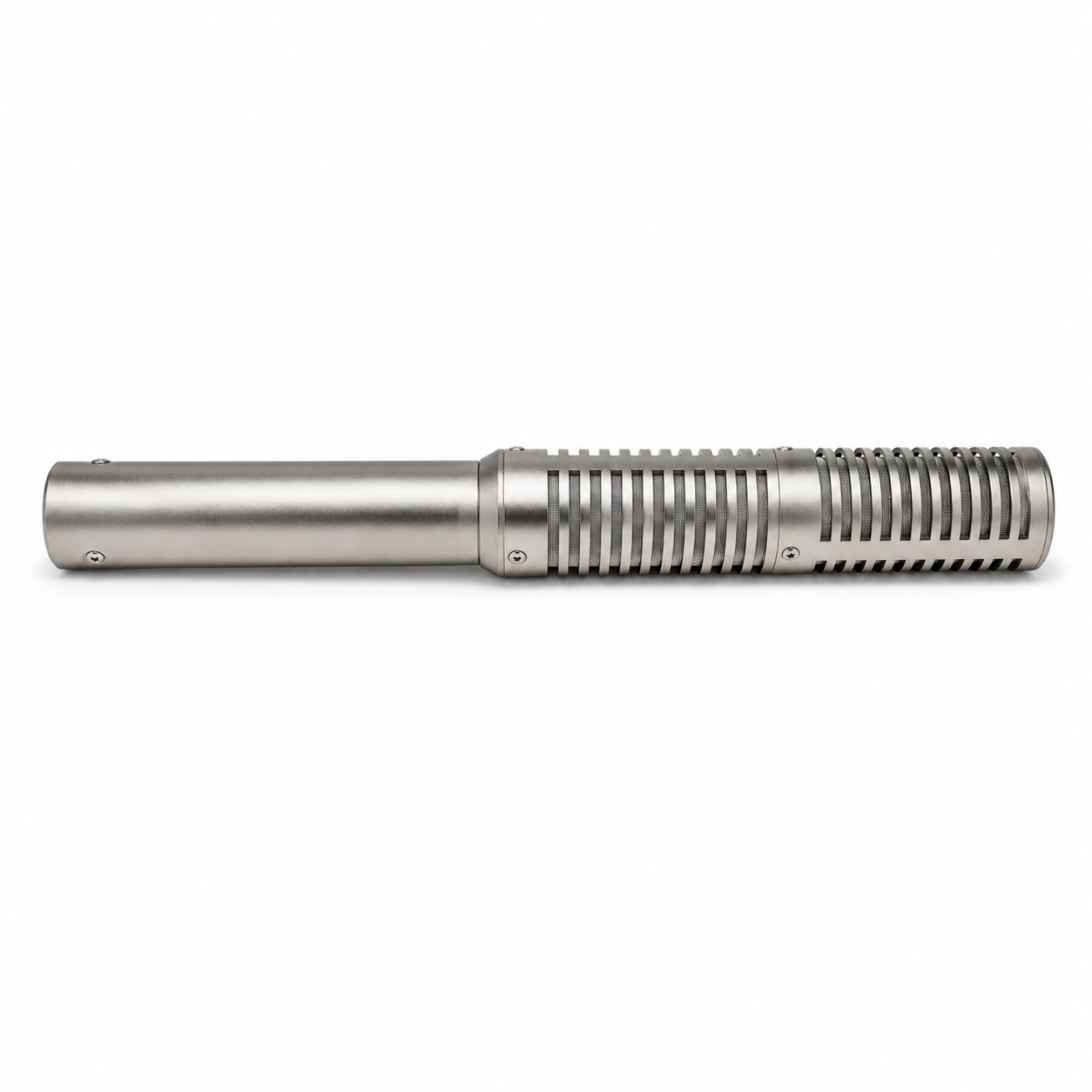
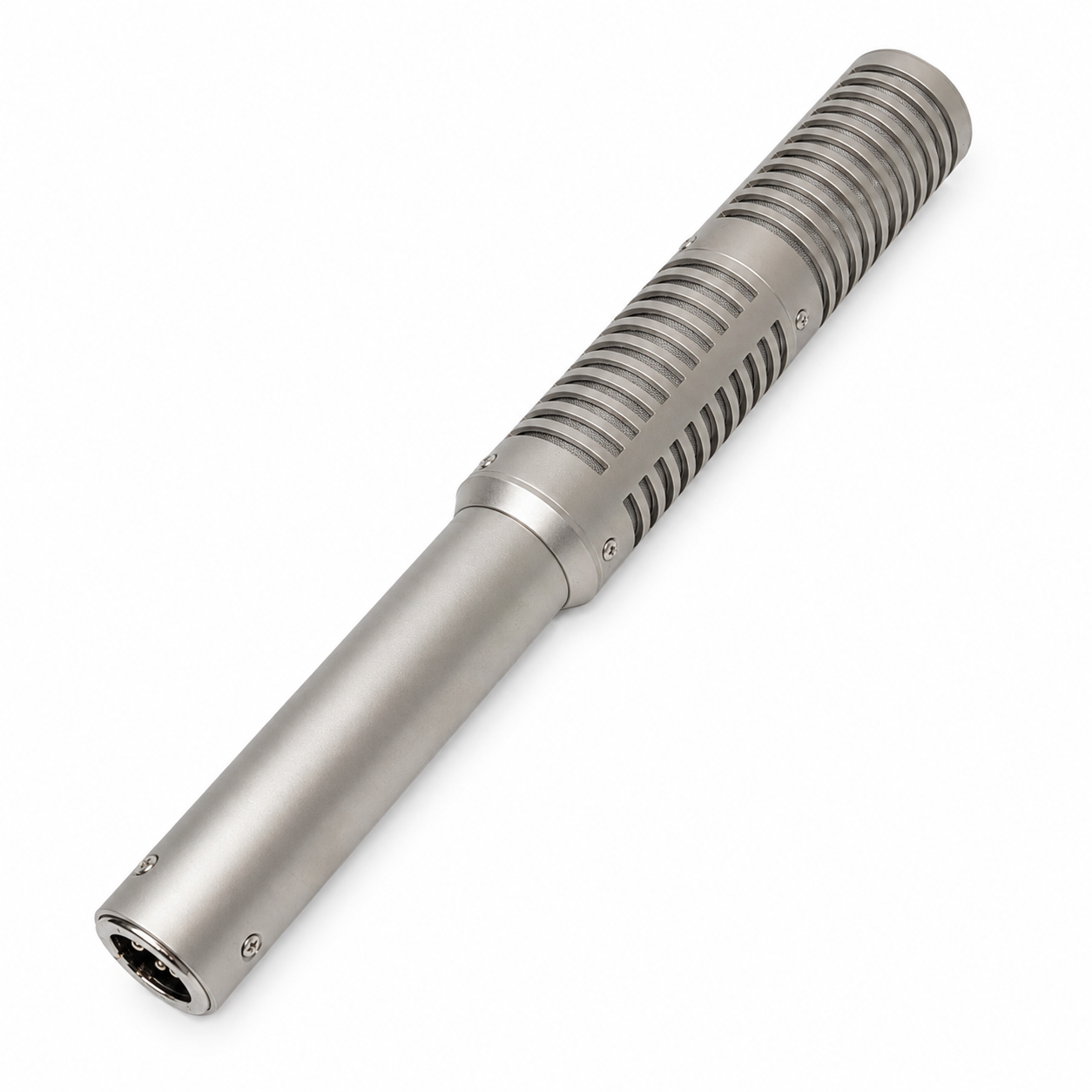
One mic. One stand. A coherent stereo picture of almost anything you put in front of it.
Two matched figure-8 ribbons in a fixed coincident array—ready for Blumlein, Mid-Side, mono and room work without rebuilding the setup every time.
Free Worldwide Shipping
No code. No minimum spend.
Tracked delivery + signature
A clear journey from our studio to yours.
Tested before dispatch
Every microphone is checked before it leaves South Australia.
THE SWISS ARMY MICROPHONE
Panning places a mono sound between the speakers. Blumlein captures a stereo event—the source, the room and the timing relationships between them.
A traditional Blumlein pair depends on two closely matched figure-8 microphones, careful 90° alignment and a stable stereo mounting system. Small changes alter the image, so setup can become part of the session.
The NUDE Stereo Ribbon fixes two matched ribbon motors inside one coincident 90° body. Put it on one stand, connect the passive split box and listen. Use the native Blumlein image, decode Mid-Side, fold to mono or rotate the microphone until the room joins the recording in the right way.
The ribbon response naturally smooths brittle transients while preserving the depth and movement that make a recording feel real.
Less time rebuilding arrays. More time moving the mic—and listening.
WE LOVE LISTENING
No grand claims. Just recordings. Put on headphones and listen for width, depth and the natural smoothness of a ribbon.
PERCUSSION
Dan Slater records percussion with one Stereo Ribbon, lightly processed in Logic Pro.
PIANO + ROOM
Tom Chapman captures Clara Haberkamp in Leipzig using only the Stereo Ribbon.
DRUM OVERHEADS
A practical overhead comparison with Coles 4038s and Neumann U87s.
ONE MIC · FULL BAND
A full-band session captured with a single NUDE Stereo Ribbon.
RECORDING APPLICATIONS
One microphone, many applications. Move it, turn it and let your ears decide. If it sounds good, it is good.
A powerful, coherent stereo picture of the whole kit.
Hear the overheadsRibbon smoothness with intimacy, body and natural presence.
Read owner proofWarm body, softened pick edge and natural stereo movement.
Hear it in a full bandNatural weight, dimensional room tone and a coherent stereo image from one position.
Hear the pianoCapture the section and its blend while taking the bite off.
Read owner proofA broad, dimensional image without turning every player into a solo spot.
Read owner proofTame bright transients while keeping rhythm, detail and air.
Hear the percussionAdd warmth and body to metallic instruments.
Read owner proofTHE ENGINEERING, WITHOUT THE HOMEWORK
Four specifications that explain the workflow and the range—not a wall of technical homework.
Two sonically matched figure-8 ribbons share one microphone body.
The Blumlein relationship is built in rather than rebuilt on a stereo bar.
The ribbon moves easily with the sound, preserving small changes in level and texture while naturally softening the sharpness that can make cymbals, strings and vocals feel hard.
Published headroom for drum overheads, brass, guitar cabinets and other loud sources.
GO DEEPER

Published frequency response: 28–16,500 Hz ±3 dB.
EVERYTHING IN THE BOX
The NUDE Stereo Ribbon arrives as a working recording system: protected with all the pro-audio accoutrements ready to split into left and right channels
PROTECTION
Foam-cut storage keeps the microphone and supplied accessories together between sessions and in transit.
CONNECTION
One cable carries both ribbon outputs from the microphone to the passive splitter box.
SPLITTING
One five-pin input becomes two standard three-pin XLR outputs. Passive; it does not change the sound.
MOUNTING
Isolate stand-borne vibration and add useful ribbon protection for closer recording work.
FROM NUDE OWNERS
Perspectives from engineers and producers who put the Stereo Ribbon to work.
The biggest, jaw-dropping moment was the stereo field. It was accurate to what I hear while sitting at the kit.
Completely changed my workflow for recording. Now I am actively looking for things to try it on.
Silky smooth but never dull. It excelled on drum overheads, piano, big band, trumpet and saxophone.
I immediately found what I was looking for: well-balanced, nicely imaged, airy stereo drums—with such an easy, time-saving setup.
On solo grand piano, it was like being inside the instrument. The performer and her producer loved it.
I love how flexible it is as Mid-Side, a stereo room mic, or a mono ribbon on guitar cabinets.
It became my go-to for acoustic guitar and percussion: easy stereo capture and a consistent warm tone that flatters the source honestly.
You can make a whole recording with just one mic. On a symphonic orchestra, it punched way above its weight class.
A mainstay on my drum overheads for years. Easy to place, full-bodied, and brilliant at representing the space in a room.
GOOD TO KNOW
The practical questions that come up before the first session.
No. A clean interface or preamp with around 60 dB of available gain is a useful starting point for quieter sources. Loud sources such as drums, brass and guitar cabinets usually need much less. An inline booster is optional when you want extra clean gain.
Best practice is to switch phantom power off. In a correctly wired balanced setup, the transformer-isolated output should prevent phantom power reaching the ribbon motor. Patchbays, damaged cables, global phantom switches and miswired leads can still create avoidable risk. Use properly wired balanced XLR cables.
One five-pin XLR carries both ribbon signals. The passive split box turns that into two clearly labelled three-pin XLR outputs, with better strain relief and a more robust connection than a Y-split lead. It is passive and does not change the sound.
As a starting point, aim the five-pin XLR latch toward the source. Then rotate the microphone slightly left or right until the stereo image works in your room. Your ears are the final arbiter.
Yes. Record both outputs for the native Blumlein image, decode them as Mid-Side, or fold the result to mono. The coincident geometry keeps the workflow simple.
READY WHEN YOU ARE
Two matched ribbons. One stand. A stereo image ready to shape from the first take.
$553.00
In stock and ready to order
BACKED BY NUDE


